getnews.online

What’s next

The ideas and inventions that will shape the tech you use.

IdeasOfficial

Mercedes-Benz and NVIDIA expand their automated driving partnership

The two companies will build the next driver assistance systems together, aiming at future Level 4 uses such as robolimousines.

Why it matters. It shows how carmakers plan to bring AI driving help to future cars.

In simple words. Mercedes and NVIDIA will keep working together on cars that help with driving. They did not say when you can buy one.

For most peopleMake it about you →

Watch: no cars or dates yet.

Your call: hype or real?

RobotsReport

Micron is developing EIM memory built for humanoid robots

Micron says edge inference memory stacks low-power DRAM on a logic die. Reports expect mass production in 2028.

Why it matters. Robots need memory that is fast but sips power, and Micron is designing for that.

In simple words. Micron is designing a special computer memory for robots that walk and work. It is still being built and should reach products in a couple of years.

For most peopleMake it about you →

Watch: it is years away.

Hype3
Real1
As advertised

Your call: hype or real?

Robots: top picks right now

Compare →
Best for what it can do today

Humanoid · Trials with companies · 190 cm

GoodLarge companies testing a humanoid for heavy material handling.

Watch outIt is built for industry, and 2026 units are already committed to its first partners.

Best value

Robot dog · On sale · 40 cm

GoodCurious people, schools and developers who want an affordable robot dog.

Watch outThe battery lasts about 2 to 4 hours, and the $1,600 base model has fewer features than the pricier versions.

IdeasReport

2,590 cycles: WPI turns mixed battery waste into new cells

Researchers at Worcester Polytechnic Institute built full test cells from recovered waste that lasted about twice as long as commercial ones.

Why it matters. Old batteries could become new ones without losing quality. This is lab work, so it is years from products.

In simple words. Scientists took apart old batteries and used the pieces to make new ones. The new ones lasted about twice as long in tests. It is still a lab idea.

For most peopleMake it about you →

Worth a look: old batteries may get a second life.

Hype3
Real2
As advertised

Your call: hype or real?

IdeasReport

40x fewer errors: Google tests a new way to make quantum 'magic states'

On its Willow chip, Google prepared special quantum states and checked them over and over, keeping only the good ones.

Why it matters. Quantum computers need these states for many useful tasks. Making them cleanly is one of the hard steps toward a working machine.

In simple words. Quantum computers make many mistakes. Google found a way to prepare an important ingredient with far fewer mistakes. It is still a lab test, and a useful quantum computer is far away.

For most peopleMake it about you →

Skip: nothing changes for you. It is research, years from a product.

Your call: hype or real?

Face-off · Robots

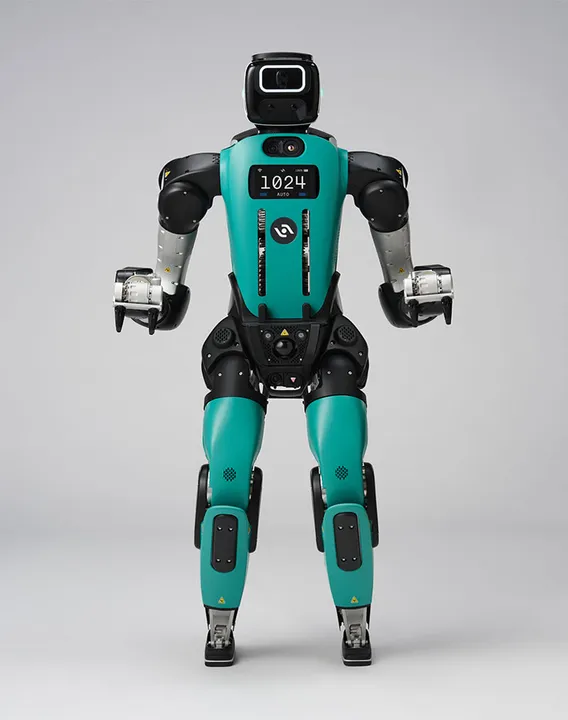
Pick the Agility Robotics Digit for being ready to buy.

See who wins →Images: Agility Robotics, Boston Dynamics

IdeasOfficial

Korean team's nanoscale coating makes hydrogen cells work better and last longer

Sungkyunkwan University researchers added a very thin layer inside ceramic fuel cells. The cells made more power and ran steadily through quick temperature swings.

Why it matters. Cleaner power and hydrogen need cells that last. This is early lab work, not a product you can buy.

In simple words. Scientists in Korea put a very thin layer inside a special power cell. It helps the cell make more electricity and last longer. It is still only in the lab, so it will take years to reach real products.

For most peopleMake it about you →

Worth a look: a small step toward cleaner energy.

Your call: hype or real?

IdeasConfirmed

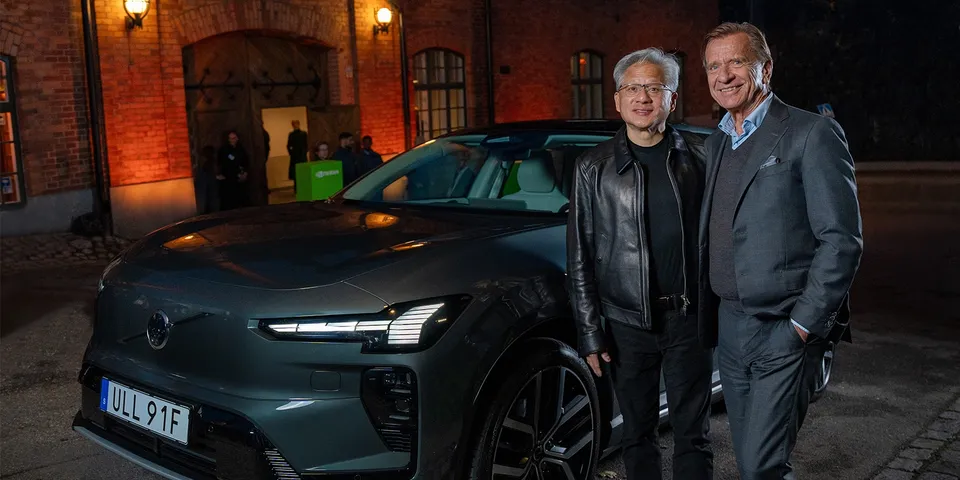
Volvo plans hands-free point-to-point driving by 2030 with NVIDIA

Volvo and NVIDIA are expanding their partnership. Volvo wants a driving system for city streets, starting in a next-generation car.

Why it matters. A big carmaker is choosing a shared computer and software platform for driver assistance. The driver still has to supervise it for now.

In simple words. Volvo and NVIDIA will build a system that helps cars drive on city streets. Volvo says it should arrive by 2030. The driver still has to watch the road.

For most peopleMake it about you →

Worth a look if you like cars: safety and trust are Volvo's focus here.

Your call: hype or real?

IdeasReport

TU Delft gives a tiny drone whiskers so it can feel its way in the dark

Researchers built a drone with two touch-sensing whiskers. It followed walls and found exits in complete darkness.

Why it matters. Small drones are too light for heavy cameras or lidar. Whiskers are a light way to sense walls.

In simple words. Mice use whiskers to feel walls in the dark. Scientists gave a tiny drone two whiskers that work the same way. It is only an experiment for now.

For most peopleMake it about you →

Worth a look: drones that feel like a mouse.

Hype3
Real1
As advertised

Your call: hype or real?

IdeasConfirmed

Weather forecasts two to six weeks ahead may get better with free Microsoft tool

Microsoft researchers published a Nature study on machine learning that corrects bias in existing weather models. The software is open source.

Why it matters. Farmers and emergency teams plan better with reliable long-range forecasts, and this runs on ordinary CPUs.

In simple words. Microsoft built a free tool that helps weather models guess better, even weeks ahead. It runs on normal computers. Weather services still need to start using it before your phone app gets better.

For most peopleMake it about you →

Worth a look: better forecasts help farms and rescue teams.

Hype4
Real3
As advertised

Your call: hype or real?

IdeasReport

Science Corporation implants PRIMA vision chip in first Stargardt patient

The tiny retina implant, already sold in Europe for one eye condition, is now in a trial for an inherited disease.

Why it matters. Early results come from one person, but they show a possible new use for a chip that already exists.

In simple words. A tiny chip placed in the eye helps some people see again with special glasses. A man with an inherited eye disease now has one. He can read a word. It is early and tested in one person.

For most peopleMake it about you →

Worth a look: hopeful early science.

Hype4
Real2
As advertised
RobotsReport

Your old Android phone can be the brain of a small walking robot

UCLA researchers built PhoneBot, a 48cm biped that uses a phone's camera, sensors and chip. The design is open source.

Why it matters. Using a phone you already own removes the costliest parts of a small humanoid, making robotics easier to try.

In simple words. Scientists made a little robot that uses an old phone as its eyes and brain. It can walk and follow a person. It is for learning and tinkering, not a robot you can buy yet.

For most peopleMake it about you →

Worth a look: a fun second life for an old phone.

Hype4
Real2
As advertised

Your call: hype or real?

IdeasOfficial

A nuclear clock now keeps its own laser steady, TU Wien reports in Nature

Researchers built a thorium-based clock that corrects a laser by itself. It ran for over 24 hours, but it is still an early prototype.

Why it matters. Better clocks help navigation, networks and science. This one shows a new way to build them, though it is years from products.

In simple words. Scientists built a clock that uses the inside of an atom to keep time. It can now fix its own laser without help. It is a lab test, not a product yet.

For most peopleMake it about you →

Worth a look: a clock built from the core of an atom.

RobotsReport

EPFL builds a 1-3 mm fiber motor that can flex a robotic finger

Swiss researchers made a thin linear motor from two nested polymer fibers. Four bundled motors lifted a 46 g chocolate bar.

Why it matters. Soft, thin motors could one day help in clothing that assists movement, haptics and prosthetics.

In simple words. Researchers made a motor as thin as a thread. It can bend a small robot finger. It is still a lab project, but it may help future clothing and soft robots.

For most peopleMake it about you →

Worth a look: a motor as thin as a thread.

Hype3
Real2
As advertised
Robots🇨🇳 From ChinaReport

289 yuan a day: rented humanoid robot prices fall in China

After a Spring Festival Gala spike, some Unitree humanoids now list for rent from 289 yuan per day, about $40, reports Notebookcheck.

Why it matters. It shows how quickly interest and prices for humanoid robots can change.

In simple words. In China, people can rent robots that walk like humans. A few months ago a day cost a lot. Now some cost about the price of a few meals.

For most peopleMake it about you →

Worth a look: robots are becoming easier to try.

Hype4
Real2
As advertised
IdeasReport

500 cycles: new catalyst moves rechargeable zinc-air batteries forward

TU Darmstadt chemists built a catalyst that let a zinc-air battery charge and discharge up to 500 times in lab tests.

Why it matters. Zinc-air batteries could store much more energy than lithium-ion, but they are hard to recharge.

In simple words. Scientists made a new part that helps a special battery recharge many times. This kind of battery could one day hold much more power. It is still only a lab test, so it will not be in devices soon.

For most peopleMake it about you →

Worth a look: it shows where future batteries may come from.

Hype3
Real1
As advertised
IdeasReport

73 researchers agree test rules for indoor solar cells

A Nature Energy paper sets shared ways to test solar cells that run on lamp light, so lab results can be compared.

Why it matters. Small sensors and remote controls could one day run on room light. Fair tests help the best designs reach products.

In simple words. Scientists agreed on one fair way to test solar cells that work from room lights. Labs can now compare results. Gadgets that never need batteries may come later.

For most peopleMake it about you →

Try it: imagine a remote that never needs batteries.

Hype2
Real3
As advertised
RobotsReport

1 gram: University of Washington's DirectHop robot hops over a stair step

Researchers built a palm-size robot that pulls itself up with a motor instead of pushing off the ground like a spring.

Why it matters. Tiny hopping robots could one day explore rough ground where wheels get stuck.

In simple words. Scientists made a robot as light as a paperclip that can hop high enough to climb a stair. It is still a lab test, but one day it may explore places that are hard to reach.

For most peopleMake it about you →

Worth a look: a flea-style hopper you can picture easily.

RobotsReport

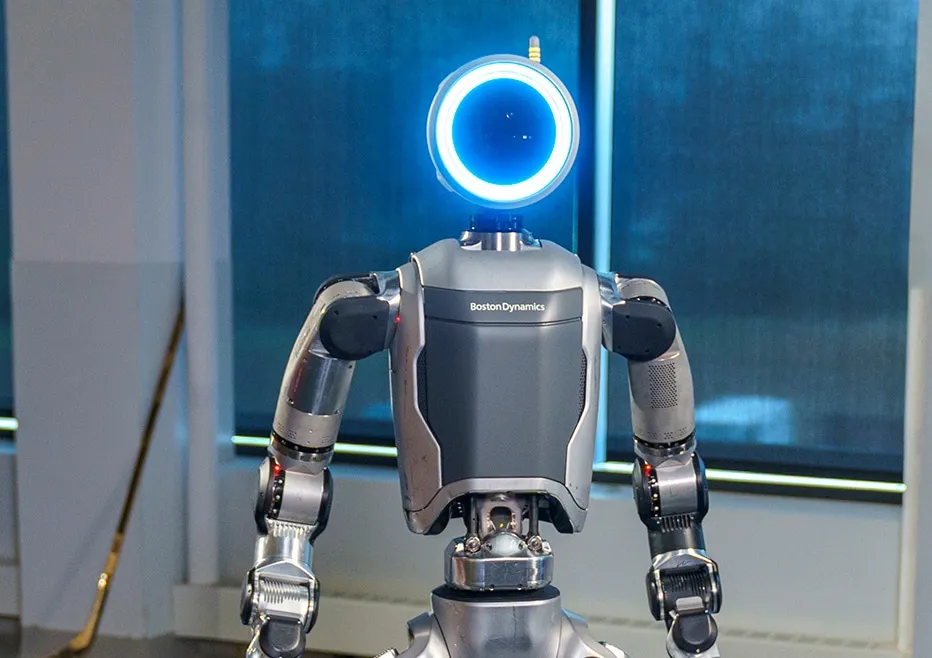
Boston Dynamics shows a humanoid hand with four fingers, 13 actuators

The company explains why its new robot hand drops the pinky, and how the design aims at mass manufacturing.

Why it matters. Hands decide what a humanoid robot can pick up. A simpler design may be easier to build in large numbers.

In simple words. Boston Dynamics has built a new hand for its humanoid robot. It has four fingers, not five, which keeps it simpler and sturdier. The company wants to build many of them.

For most peopleMake it about you →

Watch: robot hands are getting simpler and tougher.

RobotsReport

$60M: Mecka AI raises Series B to collect human motion data for robots

Sequoia led the round. Mecka pays people to record everyday tasks with body sensors and phones, to help train humanoid robots.

Why it matters. Robots need examples of real tasks. Companies that supply that data are becoming a key part of the robot supply chain.

In simple words. A company called Mecka raised $60 million. It pays people to record everyday jobs, like making coffee, using body sensors. Robot makers can use these recordings to teach robots how to do real tasks.

For most peopleMake it about you →

Watch: it shows how robots learn from people.

Hype4
Real3
As advertised
IdeasOfficial

UMass engineers grow a mesh with heart cells that makes its own electricity

A thin mesh with living human heart cells turns each heartbeat into power. In lab tests it gave 10 times more power density than centralized power systems.

Why it matters. Pacemakers and similar implants need batteries that must be replaced by surgery. This idea could remove that need, but it only exists in the lab today.

In simple words. Engineers made a thin mesh and grew real human heart cells in it. Each heartbeat bends the mesh and makes a little electricity. One day it could power pacemakers without batteries, but it only works in the lab so far.

For most peopleMake it about you →

Watch: a battery made from living cells is a big idea, still years away.

RobotsReport

Boston Dynamics names ex-Amazon Alexa chief Rohit Prasad as CEO

Rohit Prasad, who led Alexa and Amazon's AI models, becomes the third CEO in Boston Dynamics' history, effective Oct 7.

Why it matters. Boston Dynamics is betting its next phase is AI software, not only hardware. A consumer-AI leader signals a push to sell robots at scale.

In simple words. Boston Dynamics, the robot company, has a new boss: Rohit Prasad, who used to lead Alexa at Amazon. It hints that the company wants its robots to get smarter through AI software, and to sell many more of them.

For most peopleMake it about you →

Watch: a leader from Alexa now runs one of the best-known robot makers.

IdeasReport

6x wider view possible: Kyushu's VR chair needs no headset

Kyushu University researchers use a mirror plate and a chair-mounted display to give each eye its own image. No headset is worn.

Why it matters. Headsets can be heavy and tiring. This is a different idea, but the view is small and it is a research demo shown at SIGGRAPH.

In simple words. Most VR needs a headset on your face. This chair uses special mirrors to show each eye its own picture instead, so you wear nothing. It is only a demo with a small view, so it is not something you can buy.

For most peopleMake it about you →

Watch: VR without wearing anything on your face.

Hype4
Real1
Overhyped
IdeasConfirmed

A pacemaker that is powered through your skin, even while you move

Korean researchers made a wearable patch and a stretchy implant that pass power wirelessly. They tested it in rabbits and pigs, and it kept the heart paced.

Why it matters. Implant batteries run out and need surgery. Wireless power that survives movement could one day end that. It has only been tried in animals.

In simple words. Doctors put batteries inside pacemakers, and those batteries must be swapped by surgery. These researchers made a stretchy implant that gets power from a patch on the skin, even when the body moves. It worked in pigs. Humans are a long way off.

For most peopleMake it about you →

Watch: shows how future implants may never need a battery swap.

IdeasConfirmed

Tokyo team makes atom-thin chip material with a 100-million on/off ratio

A team led by Vincent Tung grew boron carbon nitride in wafer-scale films and tested 224 transistors. It fills a long-missing p-type part for 2D chips.

Why it matters. Future chips need tiny, efficient transistors of both types. This gives the p-type kind in a one-atom-thin material, but it is still a lab result.

In simple words. Chips are made of tiny switches called transistors. Scientists made a material only one atom thick that works well as one kind of switch. It is a big step for future chips, but it needs to be made at lower heat first.

For most peopleMake it about you →

Watch: the next chips may be built from sheets one atom thick.

RobotsReport

Boston Dynamics gives Atlas a new 13-joint hand, drops the pinky

The redesigned Atlas hand has a thumb and three fingers, doubles the joints from 7 to 13, and can hold power tools.

Why it matters. Hands decide what a humanoid can actually do. This one is built for factory work and mass production, not to look human.

In simple words. Boston Dynamics gave its Atlas robot a new hand with a thumb and three fingers. It can bend in more ways than the old one and can hold tools like drills. The pinky was dropped because it was not worth the extra work.

For most peopleMake it about you →

Watch: robots do not need hands that look like ours.

RobotsOfficial

NVIDIA releases Isaac ROS 5.0, free and open source, with AI agent skills

The new robot software release adds faster object tracking and ready-made skills so AI coding agents can help set up robots.

Why it matters. It lowers the work needed to build robots on NVIDIA hardware. It is a developer tool, not something you buy.

In simple words. NVIDIA released free software that helps people build robots. It can follow objects faster, and it comes with ready-made lessons so AI helpers can set robots up. It is a tool for robot builders, not something you buy.

For most peopleMake it about you →

Skip: this is a tool for robot developers.

Hype4
Real4
As advertised